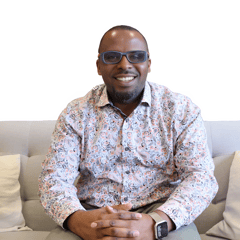
Jerome Hagenimana, MSW, RSW
Registered Social Worker - Individual, Couples, & Youth
Registered Social Worker — OCSWSSW #843969
Verify on the OCSWSSW register
Specialized therapy to process and heal from traumatic experiences, distinct from PTSD treatment.

Trauma isn't defined by what happened to you; it's defined by what your mind and body had to do to survive it. Two people can live through the same event and carry it completely differently. What makes an experience traumatic is that it overwhelmed your capacity to cope in the moment, and that your nervous system, in trying to protect you, never fully stood down afterwards.
That's why trauma therapy casts a wider net than any single diagnosis. Some trauma is a single overwhelming incident: a car accident, an assault, a frightening medical event. Some is chronic: years of an unpredictable household, a controlling relationship, workplace harassment. And some is what therapists often call "small-t" trauma: experiences like persistent criticism, rejection, or emotional neglect that don't sound dramatic in the retelling but shape how safe you feel in the world. All of it is legitimate territory for this work.

When the nervous system stays stuck in survival mode (fight, flight, freeze, or fawn), the effects ripple into everyday life, often in ways that don't obviously look like "trauma":
These are not character flaws. They are adaptations: responses that once kept you safe and have outlived their usefulness. Trauma therapy helps your system learn, gradually and safely, that the danger has passed.
Many people hold back from seeking trauma therapy because they aren't sure their experience "counts," or because they don't meet the criteria for a formal diagnosis. You don't need one. If a past experience continues to affect how you feel, think, sleep, or relate to others, that is reason enough. Trauma also rarely travels alone: it often shows up alongside anxiety, low mood, grief, or difficulty in relationships, and trauma therapy addresses those threads together rather than treating each in isolation. For those whose symptoms do fit the specific diagnostic picture of post-traumatic stress disorder (flashbacks, avoidance, hypervigilance persisting beyond a month), our PTSD treatment page covers that diagnosis and its evidence-based treatments in detail.

All trauma work at Culminate Therapy is phase-based. We never open up traumatic material before you have the stability and skills to handle what surfaces:
For many clients, EMDR (Eye Movement Desensitization and Reprocessing) becomes the processing method of choice within trauma therapy. EMDR uses bilateral stimulation (guided eye movements, taps, or tones) to help the brain reprocess memories that got "stuck" with all their original intensity. Two things make it a natural fit for trauma work: it doesn't require you to recount the experience in detail, and it follows the same safety-first logic: resourcing and stabilization always come before processing. If EMDR looks like the right fit, your therapist will walk you through exactly how it works and what to expect; you can also read our full EMDR page for a step-by-step description of the eight-phase protocol.

Healing from trauma doesn't mean forgetting what happened or pretending it didn't matter. It means the memory stops running your nervous system: you can remember without reliving, feel without drowning, and connect without bracing for impact. Clients often describe sleeping better, reacting with more choice and less reflex, feeling present in their relationships again, and treating themselves with a compassion that used to feel impossible.
Sessions are 50 minutes, in person at our Hintonburg office in Ottawa or virtual across Ontario. If you're wondering whether trauma therapy is right for you, start with a free 20-minute consultation: no referral, no diagnosis, and no obligation required.
Our Ottawa therapists are experienced in working with a wide range of concerns and will help determine if this approach is the best fit for your situation. Book a free consultation to discuss your specific needs, in person at our Hintonburg office or virtually anywhere in Ontario.
Every Culminate clinician is registered with their Ontario regulatory college and offers a free 20-minute consultation.
Registered Social Worker - Individual, Couples, & Youth
Registered Social Worker — OCSWSSW #843969
Verify on the OCSWSSW register