
Jillian Papineau, Ph.D., RP
Registered Psychotherapist
Registered Psychotherapist — CRPO #003476
Verify on the CRPO register
Evidence-based eye movement therapy that helps process traumatic memories and reduce distress, including specialized applications for performance and sport.

Eye Movement Desensitization and Reprocessing (EMDR) is an evidence-based psychotherapy designed to help individuals heal from the symptoms and emotional distress that result from disturbing life experiences. Developed by Dr. Francine Shapiro and recognized by the World Health Organization and the American Psychiatric Association, EMDR uses bilateral stimulation (such as guided eye movements, taps, or tones) to help the brain reprocess stuck memories so they no longer feel overwhelming in the present.

EMDR is widely used to treat trauma, but its applications extend well beyond PTSD. It can help individuals struggling with:
You don't need a formal diagnosis to benefit. If a memory or experience continues to affect how you feel, think, or relate to others, EMDR may help.
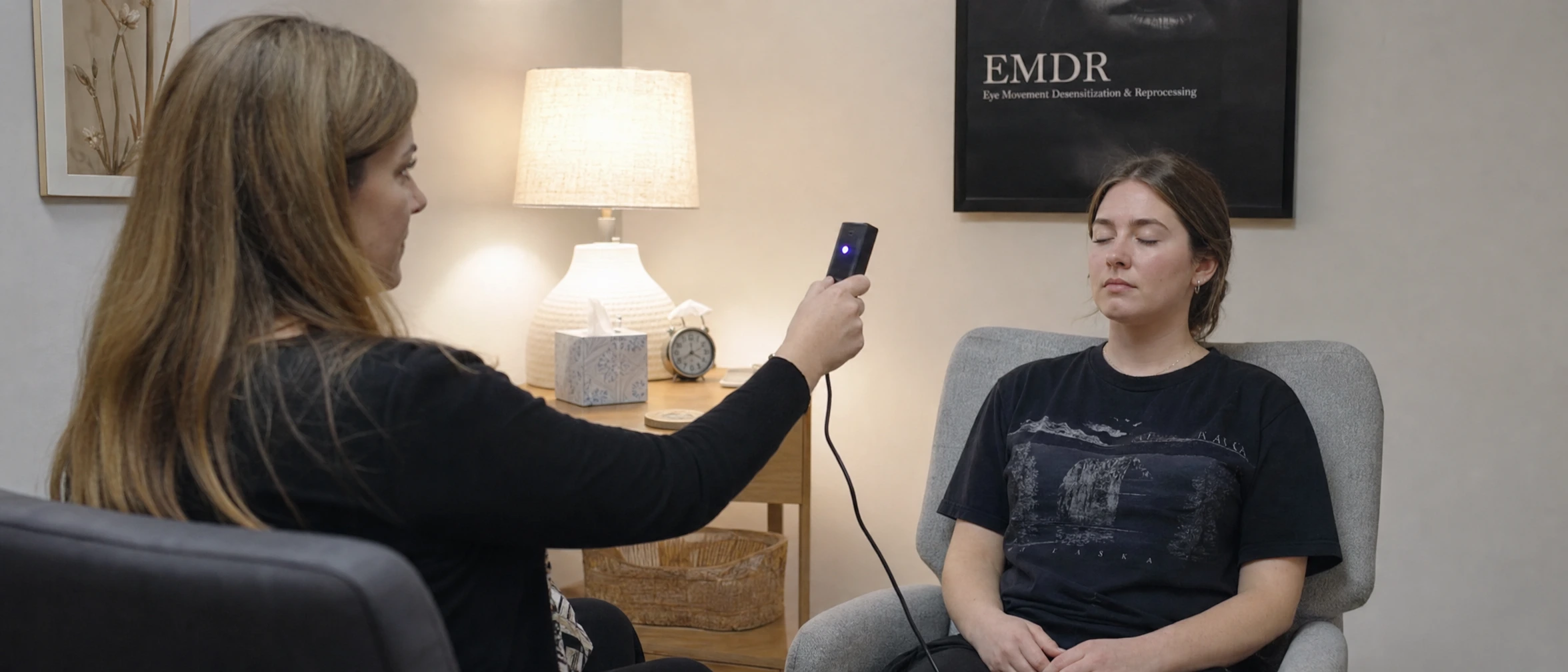
At Culminate Therapy, EMDR follows the standard eight-phase protocol, paced carefully to your comfort and stability. Here is what each phase involves:
We never push you past what feels safe. Stabilization comes first, and processing only begins once you have the tools to manage it.
Starting EMDR doesn't mean going straight to your hardest memories. The first sessions build the foundation that makes processing possible:
How long this groundwork takes varies from person to person. It is often shorter for a single, recent event and longer for experiences that were repeated or began early in life, and your therapist will talk the timing through with you. You set the pace, and you can pause at any time, including in the middle of processing.

EMDR is recognized for producing meaningful change, often without requiring detailed verbal recounting of the trauma:
In-person EMDR therapy in Ottawa takes place at our Hintonburg office, but you don't need to live nearby. Clients anywhere in Ontario can do EMDR by secure video as part of our online therapy across Ontario. The eight phases stay the same; what changes is how bilateral stimulation is delivered:
A larger screen, such as a laptop or tablet, makes on-screen eye movements easier to follow. A private space where you won't be interrupted matters even more than usual, and it helps to leave a little time to settle after the session ends. Your therapist will confirm during your consultation whether virtual EMDR is a good fit for your situation, and you can switch to in-person sessions if that suits you better.
EMDR is provided within standard individual sessions, so fees are the same as for individual therapy: $170 to $185 for a 50-minute session, depending on the therapist, whether you meet in person or online. Psychotherapy is HST-exempt, so no tax is added.
EMDR delivered by a Registered Psychotherapist (RP) or Registered Social Worker (MSW, RSW) is typically claimed as psychotherapy under extended health plans. Coverage depends on your plan covering those designations, so check with your insurer before you start. Many of our therapists offer direct billing to insurers including Manulife, Canada Life, Sun Life, and Green Shield. See our insurance and direct billing page for details.

Difficult memories don't have to define your present. Our trauma-informed therapists offer EMDR in a compassionate, paced way, helping you process what's been holding you back and move forward with greater ease. Reach out to learn whether EMDR is the right fit for you.
The same mechanism that helps the brain reprocess trauma can also clear the mental blocks that hold high performers back. EMDR for Performance & Sport applies the standard EMDR protocol to the specific pressures faced by athletes, coaches, performers, and professionals operating in high-stakes environments. The goal is not to treat illness, but to remove what's getting in the way of confident, sustainable performance.
It can help with:
As with all EMDR work, we build stabilization and resourcing first, then reprocess the target memories or beliefs so they no longer hijack focus under pressure. Many people notice a calmer baseline, sharper concentration, and a restored sense of self-trust.
EMDR for Performance & Sport is a clinical service delivered by a registered psychotherapist. It pairs naturally with the non-clinical Performance Under Pressure coaching offered through Culminate Performance. Together, therapy clears what's stuck and coaching builds what's next.
Our Ottawa therapists are experienced in working with a wide range of concerns and will help determine if this approach is the best fit for your situation. Book a free consultation to discuss your specific needs, in person at our Hintonburg office or virtually anywhere in Ontario.
Every Culminate clinician is registered with their Ontario regulatory college and offers a free 20-minute consultation.
Registered Psychotherapist
Registered Psychotherapist — CRPO #003476
Verify on the CRPO register
EMDR is provided within standard individual sessions, so fees follow our standard individual rates: $170 to $185 for a 50-minute session, depending on the therapist. Psychotherapy and counselling services are HST-exempt, so no tax is added.
No. One reason many people choose EMDR is that it does not require detailed verbal recounting of the traumatic experience: the processing happens through bilateral stimulation while you hold the memory in mind.
EMDR is offered both in person at our Hintonburg office and virtually across Ontario, using screen-based bilateral stimulation. Your therapist will confirm during your consultation whether a virtual format is a good fit for your situation.
It depends on your history and goals: a single-incident trauma generally takes less time than long-standing or repeated experiences, and stabilization always comes before processing. Your therapist will map out a plan with you and review it as you go.
EMDR delivered by a Registered Psychotherapist (RP) or Registered Social Worker (MSW, RSW) is typically claimed as psychotherapy under extended health plans, and many of our therapists offer direct billing to major insurers. Confirm with your insurer which designations your plan covers.
After a brief check-in, your EMDR therapist guides you through short sets of bilateral stimulation while you hold a memory in mind. Between sets you pause and share a few words about what you noticed; you don't have to tell the whole story. Feelings, images, or body sensations may come up and shift as you go. Each session ends with time to settle before you leave or log off.
EMDR can stir things up. Between sessions, some people feel tired or unsettled, notice memories or feelings surfacing, or have more vivid dreams. Your therapist plans for this: sessions close with grounding, you'll have calming skills to use between sessions, and the pace can be slowed or paused at any time. Let your therapist know what you notice so they can adjust the plan.
No. You stay awake, alert, and aware of your surroundings throughout. You can talk with your therapist between sets, you decide what you share, and you can stop at any point.
Book a free 20-minute consultation through our consultation page or directly at culminategroup.janeapp.com. Your therapist will assess whether EMDR is the right fit and explain exactly what the process would look like for you.